

Learning-based Diagnostic Concept for the Early Detection of Bee Diseases

The aim of the project is to develop an innovative digital solution for a non-invasive diagnosis of varroosis for the practice. Previous diagnostic methods for assessing the infestation of the Varroa mite are rather unspecific, since the number of brood cells infested by Varroa mites is not recorded, but only the mites that were found either without treatment (diagnostic insert) or after treatment, e.g. with powdered sugar or by washing out, fall off the adult bees.
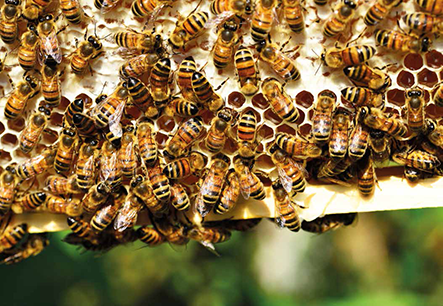
However, this happens much later, when the population of the Varroa mite has already significantly advanced. A diagnostic method that does not disturb the bees and can be carried out early in the bee year (March/April) and during the entire vegetation period, which records the number of cells with Varroa mites, would therefore be a real innovation and a reliable tool for science and practice.
The Idea
All previous diagnostic methods do not take the behavioral and reproductive biology of the varroa mite into account. To reliably record the Varroa mite in the brood cells, we exploit the natural behavior of the mite which is is very closely linked to the larval development of the bees. We have developed a cell-based detection method, whereby the number of cells with Varroa mites in the sensed area of the individual honeycombs is recorded. A complete honeycomb inspection is conceivable as well, but rather unnecessary.
The matching of the data from the behavior analysis with the sensor data offers an ideal platform to generate training data for our learning-based diagnoses and an ideal basis for the development of our sensor concept. The project has shown so far, how important it is to have close interlinking between biology and sensor technology, signal processing and algorithm development, together with a fundamental understanding of bringing such comprehensive processes into real functions.
Project Management:
Prof. Dr. K. Witte
Dr.-Ing. K. Hartmann
Dr. rer. nat. W. Weihs
H.-W. Wunderlich
Contact:
Dr.-Ing. K. Hartmann
