

869th WE-Heraeus-Seminar on Computational Optical Microscopy

Prof Ivo Ihrke co-organised the 869th WE-Heraeus Seminar on Optical Microscopy from 1-6 November 2026 at Physikzentrum Bad Honnef with Prof Rainer Heintzmann (U Jena) and Prof Monika Ritsch‐Marte (Med. U Innsbruck).
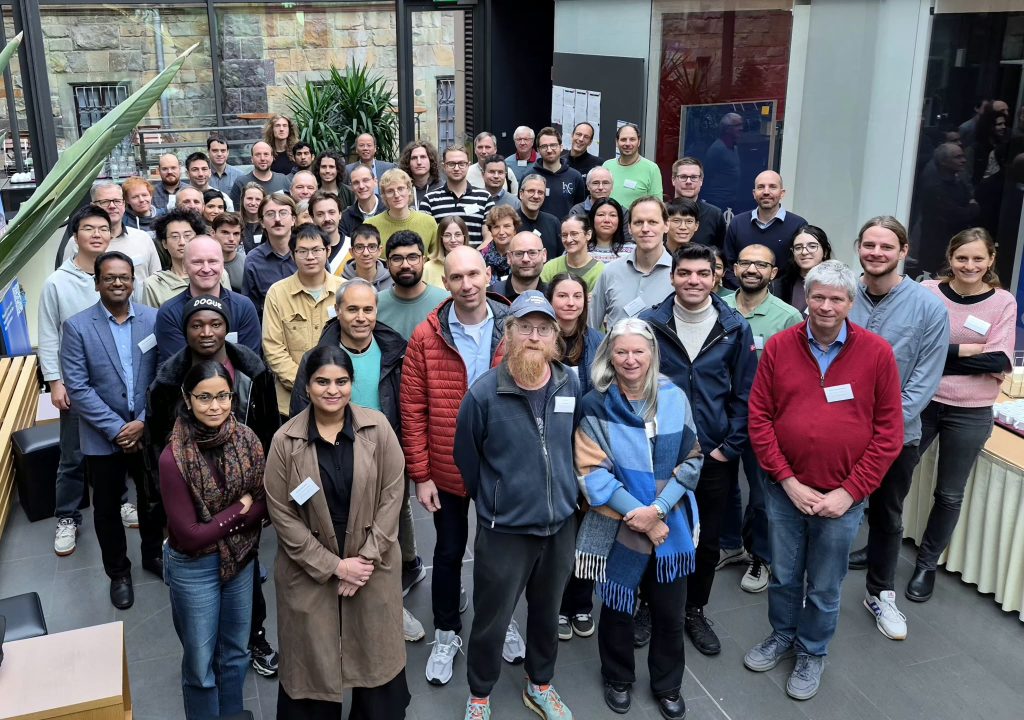
The seminar brought together researchers from diverse fields to define and address the challenges in Computational Optical Microscopy lying ahead. While optical microscopy has a history of several hundred years and has led to countless discoveries, it is still a very dynamic research area. Innovation in the area is increasingly influenced by computational approaches, in particular inverse problems, coding theory (e.g. sparse coding), optimisation, and most recently, large scale machine learning. Continued advances will enable further breakthroughs and innovation exports to other scientific disciplines.
While many techniques still mainly perform an automated post-processing of microscopic images, increasingly employing machine learning, the area of computational microscopy aims at fundamentally merging system design and computation with the goal of improving performance, contrast, speed and the dimensionality of imaging.
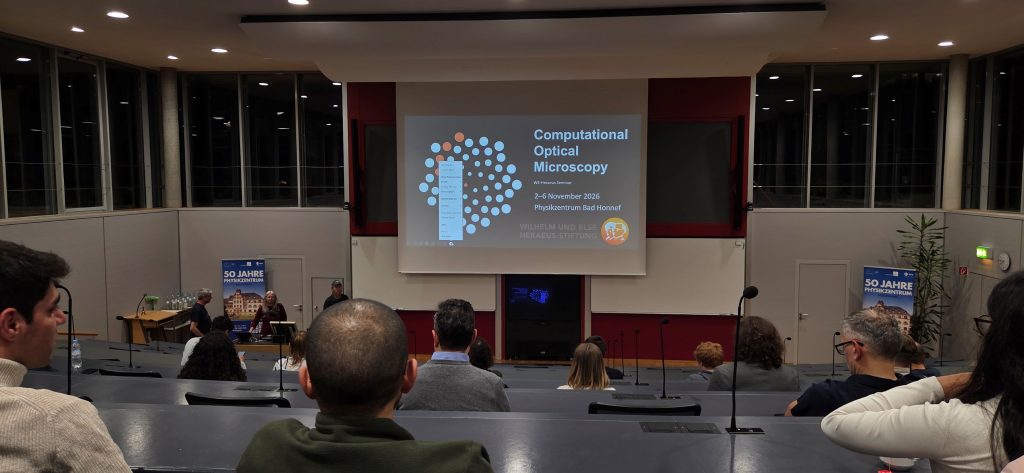
A challenge in the development of the field is the wide variety of background knowledge that is necessary to tackle the challenges: physicists often struggle with developing efficient and high-performance algorithms, while not many computer scientists have the in-depth physical understanding to develop novel microscopy schemes. Mathematical developments concern novel simulation and optimisation schemes, convergence guarantees, etc. For sustained progress, the development of an interdisciplinary exchange and, in the mid-term, the development of a cohesive subfield is a necessity.
